
GuardX AI for ESP Pump Monitoring: Reading Failure Signals Before Shutdowns
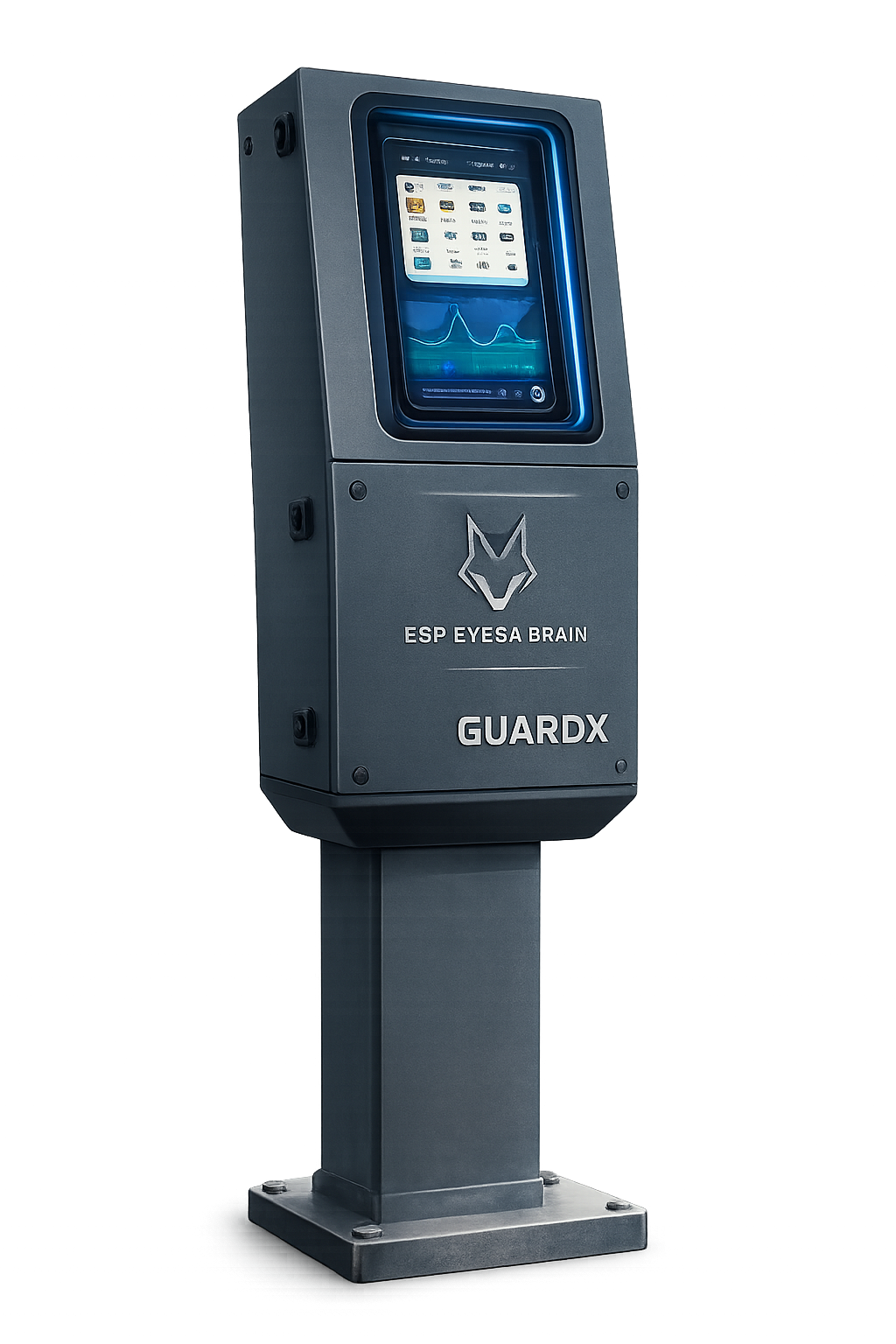
GuardX AI is not a generic digital tool. It is positioned around one technical problem: ESP and pump failure visibility. By watching operating signals and surfacing abnormal patterns, GuardX helps field teams in Egypt move from reacting after shutdowns to planning maintenance earlier.
Product focus
GuardX AI ESP monitoring, pump signal visibility, abnormal-pattern detection, oilfield maintenance decisions, and Egypt field operations
Questions this article answers
What does GuardX AI monitor in an ESP system?
How can ESP monitoring reduce surprise shutdowns?
Does GuardX AI replace field technicians?
GuardX AI is built around ESP failure visibility
An electrical submersible pump can fail for reasons that start small: unstable operating conditions, changing load behavior, abnormal current patterns, temperature stress, vibration symptoms, or a well condition that pushes the pump outside its expected range.
GuardX AI is positioned to give field teams a clearer view of these signals before they become a shutdown event. The value is not the word AI by itself. The value is seeing pump behavior early enough to discuss action.
The useful data is operational, not decorative
For ESP monitoring, useful data should describe how the pump is behaving under real field conditions. Teams may need visibility into electrical load trends, start and stop events, temperature movement, pressure context, alarm history, and other telemetry already available from the site.
A GuardX AI pilot should begin by mapping which signals exist, where they are captured, how often they update, and which signals are trusted. Without clean operating context, any monitoring system becomes a dashboard with weak decisions behind it.
Abnormal-pattern detection needs field context
Abnormal-pattern detection should not be treated as magic. A pattern only matters when it is compared with the pump's expected operating envelope, the well condition, the duty cycle, the maintenance history, and the actual consequences of a failure.
For Egypt oilfield and industrial pump teams, this means GuardX should help separate noise from useful warnings. A small signal change may be normal after a process change, while the same change may be important after repeated trips or rising temperature stress.
Alerts should support maintenance planning, not only alarms
A strong monitoring workflow does more than show a red warning. It helps teams decide whether to inspect, reduce load, schedule a maintenance window, prepare spares, or escalate the issue before the site loses production time.
GuardX AI should therefore be discussed as a maintenance decision-support system. The practical buyer question is not only whether it can detect a risk. The buyer should ask how alerts are ranked, who receives them, and what action each alert is supposed to trigger.
What buyers should define before piloting GuardX AI
Before a pilot, the buyer should define the pump type, telemetry source, communication method, operating limits, alert owners, dashboard users, enclosure needs, commissioning steps, and success criteria. These details decide whether the system can become useful in the field.
For Atta conversations in Egypt, GuardX AI fits best when the customer has a clear ESP or pump reliability problem and wants better visibility, earlier warnings, and a more disciplined way to plan maintenance before failures become expensive shutdowns.
A GuardX pilot should define the failure modes first
The best monitoring pilots begin by naming the failures the team wants to see earlier. For ESP and pump systems, this may include repeated trips, abnormal current behavior, temperature drift, pressure mismatch, unstable starts, or symptoms linked to well conditions.
If failure modes are not defined, the dashboard can collect data without creating useful maintenance decisions. GuardX AI should be configured around the field team's real pain points.
Signal quality matters as much as the AI layer
AI-supported monitoring depends on the quality of the signals feeding it. Bad sensors, missing timestamps, inconsistent telemetry, or unclear operating context can make alerts weak or misleading.
Before deployment, the buyer should review sensor availability, communication reliability, dashboard users, alert thresholds, historical data, and how field notes will be connected with the signal history.
Alerts need ownership and response rules
A useful alert has an owner, urgency level, expected response, and escalation path. Without those rules, alerts become background noise and the team returns to reactive maintenance.
For GuardX AI, the site should define who receives warnings, who confirms field conditions, who approves action, and when the issue becomes a planned maintenance job.
Maintenance learning should improve over time
Every confirmed alert should teach the system and the team something: whether the warning was useful, whether the action was correct, what spare parts were needed, and how much warning time the team had.
This feedback loop is what turns monitoring into a reliability program. The goal is not only detecting one abnormal pattern; it is building a better field decision process.
FAQ
Direct answers for buyers and AI search results
What is GuardX AI for ESP monitoring?
GuardX AI is a future-facing monitoring system for ESP and pump failure visibility. It watches operating signals, highlights abnormal patterns, and supports earlier maintenance decisions.
How can ESP monitoring reduce downtime?
ESP monitoring can reduce surprise downtime by showing risky signal changes before a full shutdown. Teams can inspect, plan spares, and schedule maintenance earlier.
What signals matter for pump monitoring?
Useful signals can include load behavior, temperature movement, pressure context, trips, starts, stops, alarm history, and site telemetry that explains how the pump is operating.
Does GuardX AI replace field technicians?
No. GuardX AI should support field technicians by making signals clearer and alerts easier to prioritize. Final decisions still need engineering and site judgment.
What should be defined before a GuardX AI pilot?
Define the pump type, telemetry sources, failure modes, alert owners, response rules, communication path, dashboard users, and what success means for the field team.
Why can poor telemetry weaken ESP monitoring?
Poor telemetry can create missing context, delayed alerts, false warnings, or weak decisions. Reliable signal collection is the foundation for useful AI-supported monitoring.
Talk to sales
Does this match a need inside your facility?
Share the supply scope or technical issue, and Atta can discuss the right path for transformers, panels, gas systems, or site support.